


CALL: 075 275 78428
Drinking in the Sun
From solar time lapse to sunny pub gardens
From solar time lapse to sunny pub gardens
Drinking in the Sun started with a time lapse camera.
When installing our solar powered long term time lapse systems, we sometimes use sun path and shadow modelling tools to work out where to position the solar panels and how surrounding buildings might affect them at different times of day and throughout the year.
Looking at one of those tools sparked a different idea: if we can predict when a solar panel will be in direct sunlight, could we use the same principle to predict when a pub garden will be in the sun?
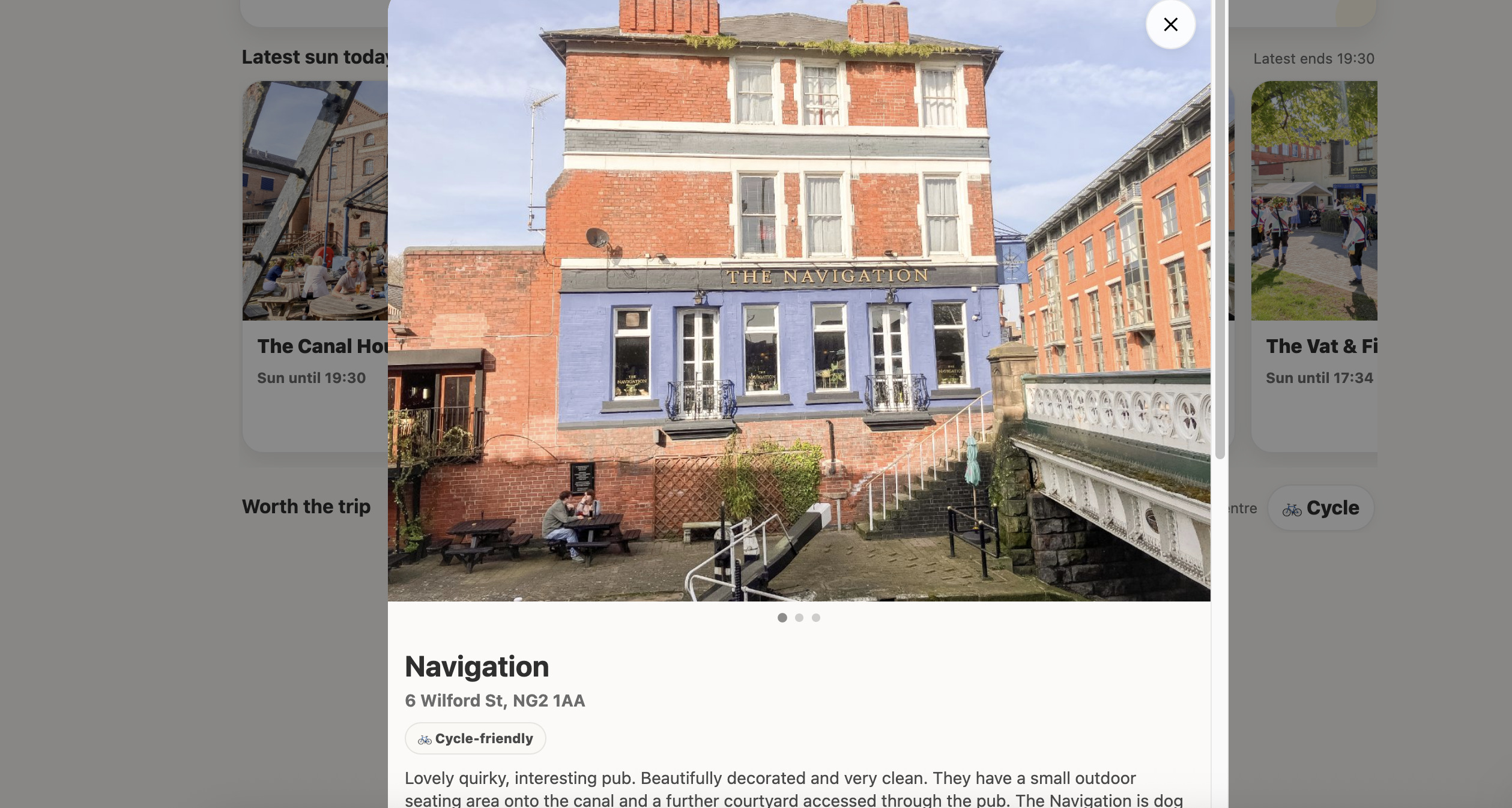
That became Drinking in the Sun, a Nottingham based app designed to help people find pub gardens that are actually sunny, rather than simply relying on a weather forecast.
Turning sunlight into useful data
The underlying problem is remarkably similar.
Whether you are trying to generate electricity from a solar panel or find a sunny table for a pint, you need to know where the sun will be, when it will be there and what buildings or other obstacles are likely to cast a shadow.
Drinking in the Sun combines sun position, local weather information and individually calibrated locations to show which pubs are sunny now, when they are likely to get sunshine later and where the best sunny spots are.
It is a slightly different Solar Story, but it grew directly out of the same interest in understanding sunlight and putting that information to practical use.
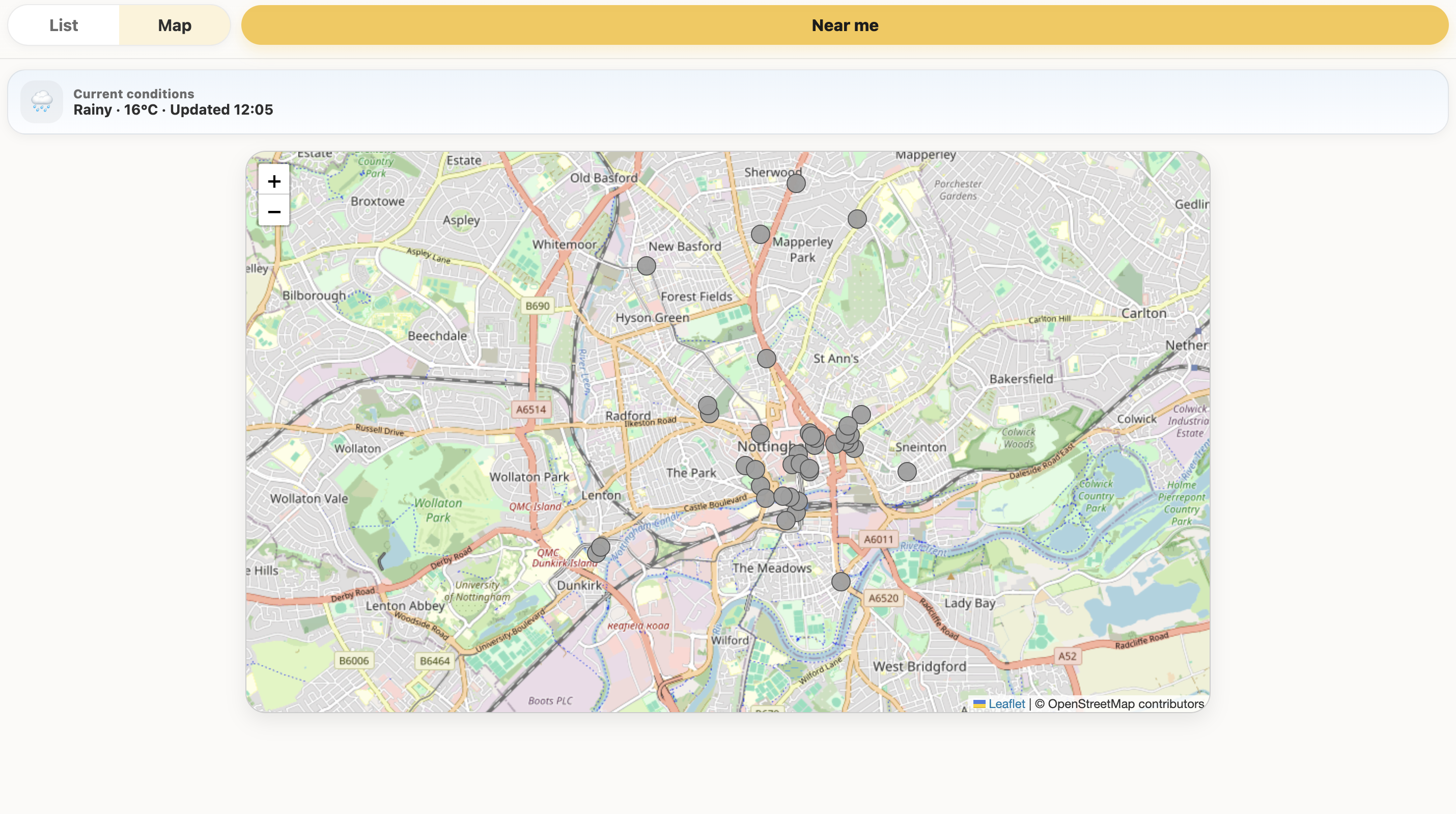
Drinkinginthe sun is free and can be found at drinkinginthesun.com.
Building a tool to map the sun
As the idea developed, we built our own tool for mapping the skyline around a specific location.
By plotting buildings, trees and other obstructions against the calculated trajectory of the sun, the system can estimate when a particular point will move into direct sunlight and when it will fall back into shade.
Because the sun path changes throughout the year, the calculations can be run for different dates and seasons.
We can also account for variables such as trees and seasonal foliage, giving a much more realistic picture of how sunlight reaches a location than simply looking at a weather forecast or compass direction.
Ironically, a tool developed while experimenting with a fairly frivolous idea has become useful again for our original work.
We can now use it when planning solar powered time lapse installations, helping us predict when a panel will receive direct sunlight, where surrounding structures or vegetation may cause problems and how that will change through the year.
The same principle also has applications beyond pubs and solar panels. It could be used to understand sunlight around a house, garden or development: whether a terrace will get evening sun, when a garden moves into shade or when direct sunlight is likely to reach a particular room.
So Drinking in the Sun has ended up coming full circle: an idea inspired by planning solar time lapse systems has produced a tool that can now help us plan those systems more accurately.
Drinking in the Sun


